

Philanthropy can feel like a “big” word, one that people often associate with high-net-worth individuals and major charitable foundations. But the truth is simple: you can be a philanthropist at any level of giving.
Whether it’s time, money, skills, or influence, philanthropy is fundamentally about contributing to something bigger than yourself.
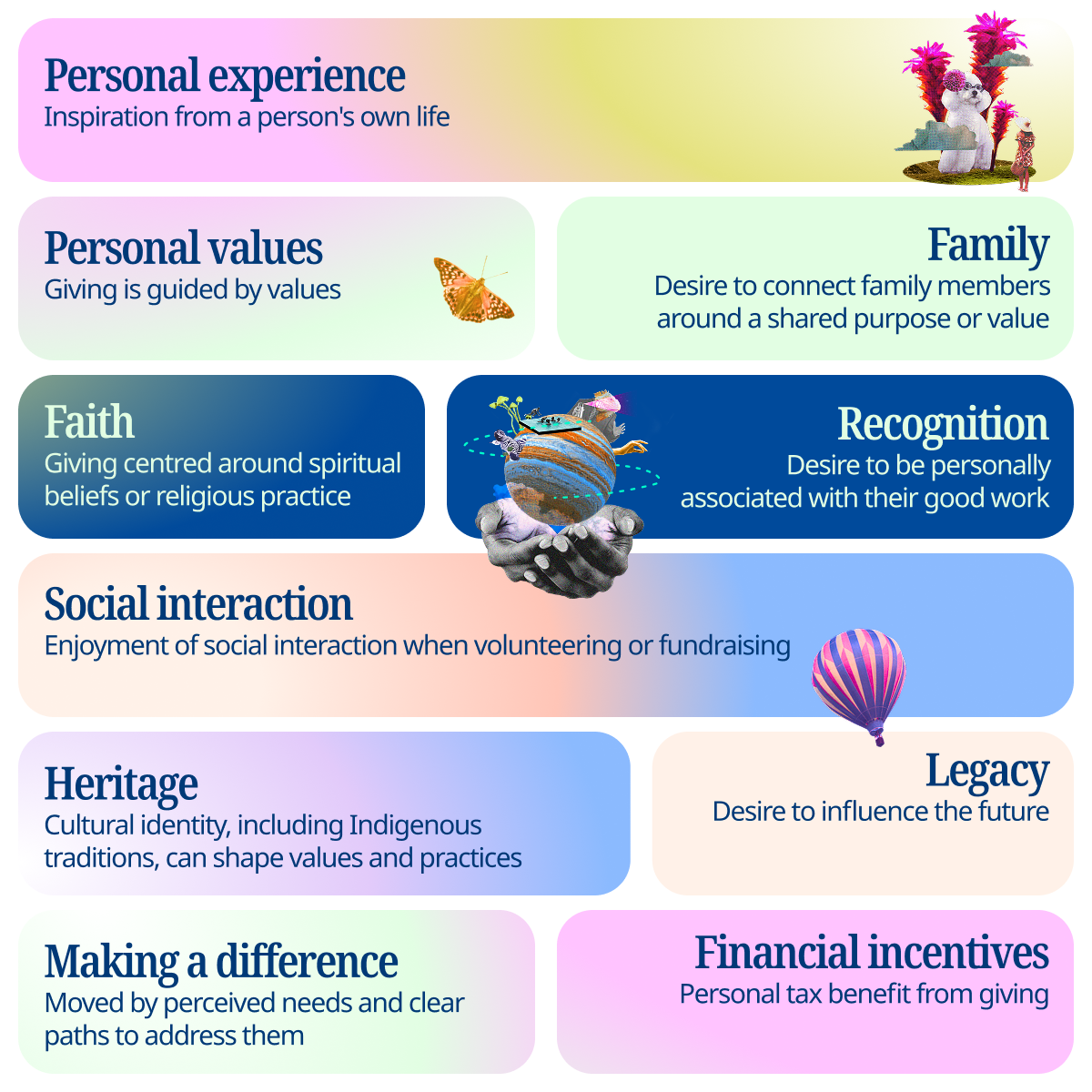
Why do people give to charity?
It’s not just about tax effectiveness.
For many high-net-worth families, giving is a way to connect across generations, build a legacy, or teach children about values and financial responsibility. But these motivations aren’t exclusive to any one group, people give for a wide range of deeply personal reasons.
When do people give to charity?
Philanthropy isn’t reserved for later in life. In fact, most of our BlueRock philanthropy clients are in their 40s and 50s, juggling kids’ education, home loans, and business commitments. They don’t fit the old stereotype of a retiree with excess wealth waiting to be distributed.
People at all stages of life are increasingly weaving charitable giving into their financial and personal plans.
How do people give to charity?
Philanthropy is becoming more democratic. The landscape of giving is shifting, opening the door for more people regardless of income level to participate meaningfully. Here are some of the ways philanthropy is evolving:
- Crowdfunding Platforms:
Online crowdfunding platforms like GoFundMe, Kickstarter, and Raisely make it easier for individuals of all income levels to contribute to causes they care about. These platforms have democratized philanthropy by enabling small contributions to add up to significant sums. - Community Foundations:
Community foundations support local philanthropy by pooling resources from a wide range of donors, including individuals, families, and businesses. They enable smaller donors to have a meaningful impact in their communities by contributing to collective funding pools. - Employee Giving Programs:
Many companies now offer employee giving programs , including matching gift programs and payroll deduction options, which encourage employees at all levels to participate in charitable giving. This trend enhances the philanthropic impact of ordinary working individuals. - Sub-Funds (called Donor-Advised Funds (DAFs) in the US):
Sub-funds have grown in popularity as they provide a flexible and accessible vehicle for charitable giving. Donors of all income levels can contribute to these funds, receive immediate tax benefits, and recommend grants to their favourite charities over time. - Micro-Philanthropy:
Micro-philanthropy involves making small, targeted donations that collectively make a big difference. Platforms like Kiva allow individuals to make micro-loans to entrepreneurs around the world, empowering them to improve their livelihoods. - Volunteerism and In-Kind Contributions:
Non-monetary forms of philanthropy, such as volunteering time, skills, and in-kind contributions, are increasingly recognized as valuable. This broadens the definition of philanthropy and encourages participation from individuals who may not have the financial means to donate money. - Social Media and Influencer-Driven Giving:
Social media has become a powerful tool for grassroots fundraising and awareness campaigns. Influencers and ordinary individuals can mobilize their networks to support causes, making philanthropy more accessible and widespread. - Giving Circles:
Giving circles are groups of like-minded individuals who come together to pool their resources and decide collectively where to donate. This model allows members to leverage their combined contributions for greater impact. - Corporate Social Responsibility (CSR):
Businesses of all sizes are increasingly adopting CSR initiatives, encouraging their employees and customers to get involved in philanthropic activities. This trend helps disseminate a culture of giving across different economic strata. - Participatory Grantmaking:
Participatory grantmaking involves communities and beneficiaries in the decision-making process of grant allocation. It ensures that the voices of those directly affected by social issues are heard and included - Impact Investing:
Impact investing allows individuals to invest in social enterprises and businesses that align with their values. This approach enables everyday investors to support ventures that generate both financial returns and social/environmental benefits.
These trends indicate a shift towards more inclusive and broad-based forms of philanthropy, making it accessible to individuals beyond the wealthiest families and fostering a culture of giving across diverse segments of society.
Creating Your Strategic Giving Structure with the BlueRock Philanthropy Team
If you're inspired to make a lasting impact through strategic philanthropy, our BlueRock Philanthropy team is here to guide you. We offer various options, including:
- Giving During Your Lifetime: Explore the possibility of giving personally or through your business, utilising options like a Public Ancillary Fund sub-fund or a Private Ancillary Fund.
- Legacy Planning: Consider setting up a fund or including a charitable gift in your will to leave a legacy that continues to make a difference even after you're gone.
Submit the form below to speak with our philanthropy consultants.